
In our fast-paced digital world, we often look for opposing escapes: serene meditation for inner calm and thrilling slot games for quick excitement https://playtocasino.com/games/fishin-frenzy-big-catch-slot-demo/. Yet, the move between these states doesn’t have to be abrupt. We investigate the concept of attentive play, using the popular Fishin Frenzy Slot as a case study. This approach allows players to connect with the game’s aquatic theme and simple mechanics in a more aware, controlled manner, potentially enhancing enjoyment while preserving a balanced perspective on play, particularly within the UK’s vibrant online gaming landscape where accountable engagement is paramount.
Contents
- 1 Creating a Balanced Gaming Session
- 2 Common Questions
- 2.1 How do you define mindful gaming?
- 2.2 Is it possible to play slots like Fishin Frenzy really be mindful?
- 2.3 How can I move from meditation to playing a game?
- 2.4 How should I handle I get too worked up or frustrated during play?
- 2.5 Will mindful gaming diminish the risk of problematic play?
- 2.6 Must I only play the demo version for mindfulness?
- 2.7 What duration should a mindful gaming session go on?
- 3 Mechanics of Fishin Frenzy for Focused Play
- 4 The Role of Sound and Visuals in Mindfulness
- 5 Fishin Frenzy Slot: A Gateway to Serenity
- 6 Establishing Intentions Ahead of You Play
- 7 The Philosophy of Mindful Gaming
- 8 Transitioning from Meditation to Play
- 9 Responsible Gambling in the UK Context
- 10 Identifying and Controlling Gaming Cues
Creating a Balanced Gaming Session
A balanced session respects both the desire for fun and the requirement for health. We structure this by implementing clear limits. A pre-session minute of breathing establishes the mood, while a post-session routine, like gentle stretching or observing three things observed in the game, assists isolate the session. Key elements for harmony encompass:
- Time Awareness:
- Financial Boundaries:
- Physical Check-ins:
Common Questions
How do you define mindful gaming?
Mindful gaming is the approach of engaging with complete, present-moment consciousness. It involves observing the game’s graphics, audio, and mechanics, as well as your own mental notes and emotions, without judgment or automatic reflex. The objective is to savor the session consciously, maintaining control and outlook, rather than acting on automatic mode driven only by the desire to triumph.
Is it possible to play slots like Fishin Frenzy really be mindful?
Certainly, any pursuit can be handled consciously. The peaceful setting of Fishin Frenzy provides a supportive setting. By centering on the perceptual details—the waves, the audio, the motion—and defining specific intentions for your playtime, you can transform slot play into a exercise of focused awareness and managed involvement, rather than a inactive or reactive activity.
How can I move from meditation to playing a game?
Bring the serene, attentive state from your meditation into the gaming session. After meditating, inhale a few inhalations before launching. Start by merely watching the game’s initial display and opening audio without immediately spinning. Establish a straightforward intention for your play session. This connects the two practices, enabling the conscious mode to remain into your gaming experience.
How should I handle I get too worked up or frustrated during play?
Reactions are natural. Mindfulness is about noticing them without being controlled by them. When you observe strong enthusiasm or frustration, pause for a moment. Acknowledge the emotion, take a deep breath, and reconnect with your pre-set goal or the sensory aspects of the game. This small pause allows you to choose your next move deliberately.
Will mindful gaming diminish the risk of problematic play?
While not a solution, it is a potent preventive tool. By promoting self-awareness, it helps you spot early warnings of pursuing losses or betting beyond boundaries. The habit of setting intentions, observing triggers, and keeping present-moment focus encourages a more disciplined and purposeful connection with gaming, inherently supporting healthier behaviors.
Must I only play the demo version for mindfulness?
Starting with the demo version is highly suggested for practice. It takes away financial stress, allowing you to focus purely on cultivating mindful awareness. Once the approach feels natural, you can use it to any style of play, as the core competence is internal awareness, not the external bet.
What duration should a mindful gaming session go on?
Length is less important than quality of attention. We advise short, focused sessions of 10-20 minutes when beginning. Use an external timer. The key is to maintain mindful awareness throughout. A short, conscious session is far more valuable for developing the practice than a long, automatic one.
Mechanics of Fishin Frenzy for Focused Play
The game’s straightforward mechanics enable concentrated engagement. With a basic 5×3 reel layout and transparent paytable, the cognitive load is minimal, allowing cognitive space for attention. The key features that can be noticed mindfully encompass:
- The Fisherman Wild:
- Free Spins Trigger:
- Catching Fish:
The Role of Sound and Visuals in Mindfulness
Fishin Frenzy’s audiovisual design is a powerful tool for mindful practice. We can employ the gentle bubbling sounds and the rhythmic casting of the fishing line as focal points, just as one uses the breath in meditation. When the mind becomes distracted by anticipation, gently guiding attention back to these consistent sensory elements roots us in the present moment. This changes the game from a potential source of tension into a dynamic object of meditation, where even the reel spins become a visual mantra.
Fishin Frenzy Slot: A Gateway to Serenity
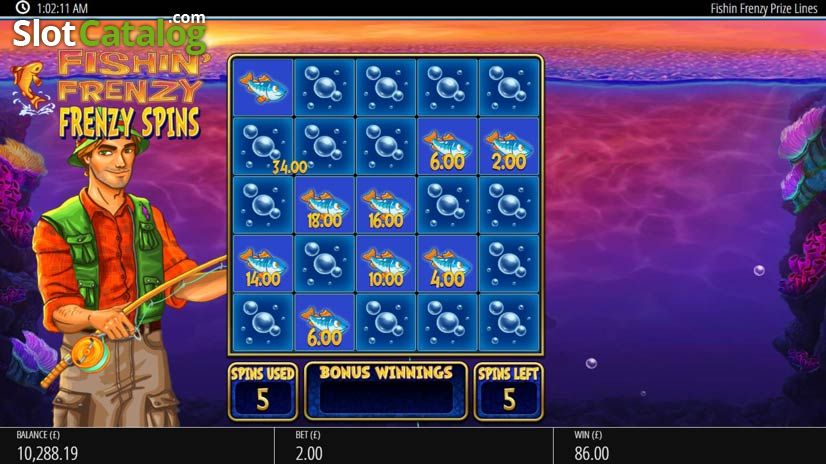
Fishin Frenzy, featuring its serene underwater theme, muted blue color palette, and calming music, offers a unexpectedly suitable backdrop for attentive play. In contrast to slots with intense audio and flashing lights, this game brings to mind the calm of a fishing trip. The main action—catching fish for rewards—is inherently simple and repeating, a quality that supports focus. We can use these ambient features as anchors for our attention, revisiting the soothing visuals when the mind wanders to ideas of wins or losses.
Establishing Intentions Ahead of You Play
Intention-setting is the bedrock of aware gaming. Prior to loading Fishin Frenzy, we consciously set the limits of our session. This is not about demanding a win but about defining our engagement. An aim could be to experience the ocean graphics for 15 minutes, to watch the rate of bonus features, or simply to work on staying present during losses. Jotting this down or stating it mentally structures the session, making it far easier to recognize when our awareness has drifted into mindless, impulsive play.
The Philosophy of Mindful Gaming
Mindful gaming represents the practice of bringing conscious, non-judgmental awareness to the gaming experience. It includes acknowledging the game’s entertainment purpose without being consumed by autopilot reactions or strong emotional swings. This philosophy encourages us to notice the sensory details—the sound of reels, the visual animations—and our own responses to them. By doing so, we transform a potentially passive activity into a conscious practice of presence, where the journey is important as much as the outcome, fostering a more balanced digital lifestyle.
Fundamental Tenets of Playful Awareness
The core principles hinge on intentionality and observation. We define a clear intention before playing, such as enjoying the theme for a set time. During play, we observe the game’s mechanics and our impulses without immediate reaction. This establishes a mental space between stimulus and response, allowing for more considered engagement. It is not about suppressing excitement but about feeling it fully without letting it determine our state of mind or subsequent actions.
Contrast with Autopilot Play
Autopilot play is characterized by repetitive, unconscious spinning, often driven by a desire to recoup losses or prolong a win streak. Mindful gaming directly counters this by inserting moments of conscious choice. We recognize the urge to “spin again” quickly and can choose to pause instead. This shift from reaction to response is the heart of integrating mindfulness into an activity typically associated with high-speed, low-attention engagement.
Transitioning from Meditation to Play
Shifting from a meditation session directly into gaming calls for a bridging mindset. We suggest taking the residual calm and focused attention into the game. Instead of rushing to spin, we can take a moment to absorb the game’s opening screen, take in the ambient music, and define our intention. This conscious transition helps keep the mindful state. Seeing the first few spins as an extension of observation, rather than a pursuit of outcome, effortlessly blends relaxation with interactive entertainment.
Responsible Gambling in the UK Context
In the United Kingdom, where gambling is a regulated form of entertainment, responsible gambling fits well with the national emphasis on user safeguards and responsible gambling. The UK Gambling Commission requires tools like awareness prompts and deposit limits. We consider mindful practice as a internal, private complement to these regulatory measures. By developing awareness, UK players can enjoy popular titles like Fishin Frenzy more safely, ensuring gaming stays a leisure activity that does not negatively impact other areas of life.
Identifying and Controlling Gaming Cues
Attentive awareness helps us identify personal cues that result in less disciplined play. These might be the “near-miss” of a big symbol, a string of small payouts, or the finish of a bonus round. By detecting the physical feelings or thoughts these events trigger—a accelerated pulse, a impulse to “chase” shortfalls—we can stop. We can then opt for a conscious answer, like doing three deep breaths or deciding to stop after the next spin, thereby preserving command over our gaming activity.
Typical Triggers in Slot Spinning
Comprehending common stimuli explains our reactions. The auditory prompt of a win, even a small one, can trigger a dopamine effect that prompts continued play. The visual “stacking” of icons that almost create a sequence creates a intense near-miss outcome. In Fishin Frenzy, the appearance of the fisherman or the free spins icon can turn into a key element for expectation. Mindfully observing these moments as mere game events, not personal commands, is a key skill.